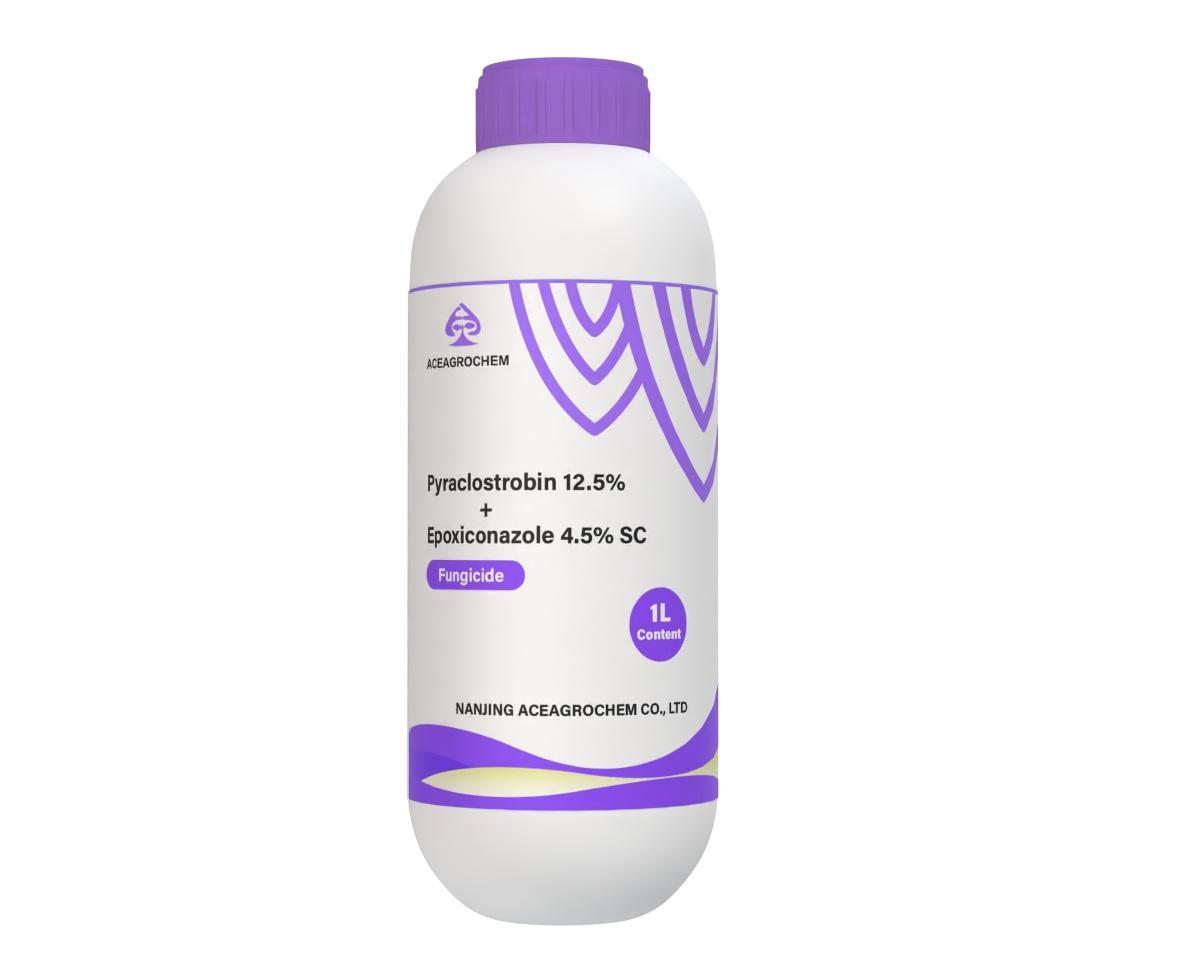
Pyraclostrobin 12.5% + Epoxiconazole 4.5% SC
Classification:
Fungicide
Formulation:
Pyraclostrobin 12.5% + Epoxiconazole 4.5% SC (Suspension Concentrate)
CAS NO:
Pyraclostrobin: 175013-18-0;
Epoxiconazole: 133855-98-8
USAGE:
This fungicide is used for the control of a wide range of fungal diseases in
various crops such as cereals, fruits, and vegetables. It is effective against
diseases like powdery mildew, rust, and leaf spot.
Pack size:
500mL, 1L, 5L, 20L/drum, or as required
Direction for Use
| Crop | Target Diseases | Dosage (SC) | Application Timing | Remarks |
|---|---|---|---|---|
| Cereals | Powdery mildew, Rust | 800-1200 mL/ha | At the early stage of disease occurrence | 1) REI: 12 hrs 2) Max 2 applications/season |
| Fruits | Leaf spot, Anthracnose | 600-1000 mL/ha | Before or at the beginning of the disease period | Add a spreader for better coverage |
| Vegetables | Downy mildew, Botrytis | 500-800 mL/ha | During the growth period when disease risk is high | PHI: 7-14 days |
Product Details
Mode of Action:
-Pyraclostrobin inhibits mitochondrial respiration by blocking electron transfer at
the cytochrome b-c1 complex.
-Epoxiconazole inhibits the biosynthesis of ergosterol, an essential component of
fungal cell membranes.
-Systemic action with good translaminar movement and redistribution within the
plant.
Benefits:
-Broad-spectrum activity against various fungal diseases.
-Long-lasting protection with preventive and curative effects.
-Improves crop health and yield by enhancing plant growth and photosynthesis.
-Compatible with many other Pesticide.
Precautions:
-PPE: Chemical-resistant gloves, goggles, and protective clothing.
-Do not apply in extremely hot or cold weather.
-Do not tank-mix with alkaline Pesticide.
-Storage: Store in a cool, dry place at 5°C to 30°C.
Environmental Hazards:
-Toxic to fish and other aquatic organisms.
-Do not contaminate water bodies during application or cleaning of equipment.
-Low toxicity to birds and bees when used as directed.
-Degrades in soil with a half-life of 14-28 days.